
Jim Beebe · Founder & Head Coach
Building Athletes:
Six Blocks, One Complete Student Athlete
Athlete Builder is a development system for student athletes and the coaches who build them. It scores an athlete across six blocks, Mindset, Knowledge, Teammates, Training, Nutrition, and Recovery, then attacks the weakest one first.
The Athlete Builder Scorecard
Every athlete has one block holding the others back.
Free, about 12 minutes. You get a score for each block, an overall score, and the weakest one: the block quietly capping everything else.
Nutrition, 41. The blocks multiply. Attack the lowest number first.
Most athletes over-train one block and ignore the other five. The Scorecard grades all six, so the work goes where it actually changes something, instead of where it already feels good.
Parents see exactly where their athlete stands, in writing, before anyone asks them to spend another dollar.
Start here
Which one are you?
Three different problems, three different starting points. Pick the one that sounds like you.
For athletes & parents
Find the block capping everything
Athletes: find the one weakness quietly capping everything else, and know what to attack first. Parents: see exactly where your athlete stands across all six blocks.
For gym & facility owners
The five blocks you're not coaching
You already train them well. The Athlete Builder Operating System gives your facility the five blocks you are not coaching, so parents see development and athletes stay longer. Six founding facilities only.
Just looking around
Start with the podcast or the book
150+ episodes with college and pro coaches. A weekly two-minute newsletter. And the book that lays out the whole system, chapter by chapter.
The Six Blocks
Champions aren't built in one place. They're built in six.
Each block is a must. Some can be faked longer than others, but all six have to be sound. Score low in one and it does not subtract from your game, it negates the rest.

Mindset
Your Why, your Core Values, your mental toughness under pressure. This block decides what every other block is worth when the game gets hard.

Knowledge
Your playbook, your position, your opponent, your technique. Talent gets you on the field. Knowing more than the athlete across from you keeps you there.

Teammates
How you treat players, coaches, trainers, and everyone else in the building. Captains get made here. So do the athletes nobody wants to block for.
Training
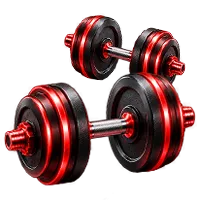
Strength, speed, power, stamina, resiliency. Where you rank in your position group is not a mystery, everyone in that locker room already knows.

Nutrition
Whether you have a process for fueling, off-season, home games, road games, or you are winging it. Specific plans come from a registered dietitian, not the internet.

Recovery
Sleep, treatment, breathing, travel. Availability is a skill. The athlete who is still on the field in November beats the one who is not.
PROOF
What coaches and parents say
“Athlete Builder provides the needed steps to develop high level athletes and teams. It provides a comprehensive roadmap for athletes to closely follow and maximize their athletic potential.”
Associate Athletic Director for Sport Performance, Football
The Ohio State University
“This is powerful stuff. You're serious about your craft.”
Co-Founder & CEO, DreamFuel
A mental performance company
“If you are serious about becoming a champion athlete or training champions, I highly suggest you get a copy of Athlete Builder. It is worth it.”
Master Coach for Parisi Speed School
Pro Strongman
QUESTIONS
What people ask before they start
How do I build my athleticism?
Train the physical qualities that transfer, strength, speed, power, stamina and resiliency, consistently, over years, not weeks. Athleticism is built by progressive overload on a timeline biology respects. Add the blocks around it: knowledge of your position, sleep, fueling, and the mindset to keep showing up when progress slows.
What are the 5 C's of mental toughness?
They are commonly listed as commitment, control, challenge, confidence, and concentration, a model drawn from sport psychology research. It is a useful vocabulary. The harder question is what you actually do about it on Tuesday. In the Athlete Builder Scorecard, mental toughness sits inside the Mindset block and gets scored, not just discussed.
How can I train to be mentally tough?
Mental toughness is a skill, not a personality trait, which means it can be trained. Start with your Why, written down where you will see it daily. Then pick one hard thing and finish it every day, exactly as promised. Toughness is built by kept promises, stacked.
Is it possible to make varsity as a freshman?
Yes, and it happens every year. It usually comes down to being physically ready before the tryout, not during it, plus knowing the system well enough that a coach can trust you. Freshmen who make varsity almost always did the work the previous off-season.
Is it hard to get an athletic scholarship?
Yes. NCAA figures put most sports between 3% and 9% of high school athletes making a college roster, and much of that is Division III, which awards no athletic scholarships at all. Athletic money is rarer than a roster spot, and most of it is partial. The ones who get there develop earlier and more completely.
What sport has the highest chance to get a scholarship?
By the NCAA's participation data, the best odds of making a college roster belong to women's ice hockey at about 32%, then men's lacrosse near 15%, with men's ice hockey and women's lacrosse around 14%. Wrestling and men's basketball sit near 3%. Those are roster odds, not scholarship odds. Pick the sport your athlete loves, then out-develop the field.
Are sports performance coaches worth it?
A good one is, and here is the test: can they tell you what your athlete's weakest quality is, and show you it moved 90 days later? Coaching that cannot be measured is just supervision. Ask any coach you are paying to show you the numbers before and after.
What is the Athlete Builder Scorecard and what will it tell me?
It is a free assessment that scores an athlete across all six blocks, Mindset, Knowledge, Teammates, Training, Nutrition and Recovery, in about 12 minutes. You will get a score for each block, an overall score, and your weakest block: the one quietly capping everything else. Take it at athlete-builder.com/assessmenttest.
The Two Minute Drill
One email a week. Two minutes.
Two ideas from the week's episodes, two from a guest, two habits worth stealing. Join 20,000+ newsletter readers. Unsubscribe whenever you want.
Goes straight into the CRM. No spam, ever.
Start where the gap is.
Every athlete has one block holding the others back. Find yours in about 12 minutes, then go to work.
© 2026 Athlete Builder, LLC. All rights reserved • Privacy Policy