
The Retention Lesson From a 20-Year Strength Gym
The Retention Lesson From a 20-Year Strength Gym
Every facility owner knows the math that actually runs the business: it's not the athletes you sign. It's the athletes who stay.
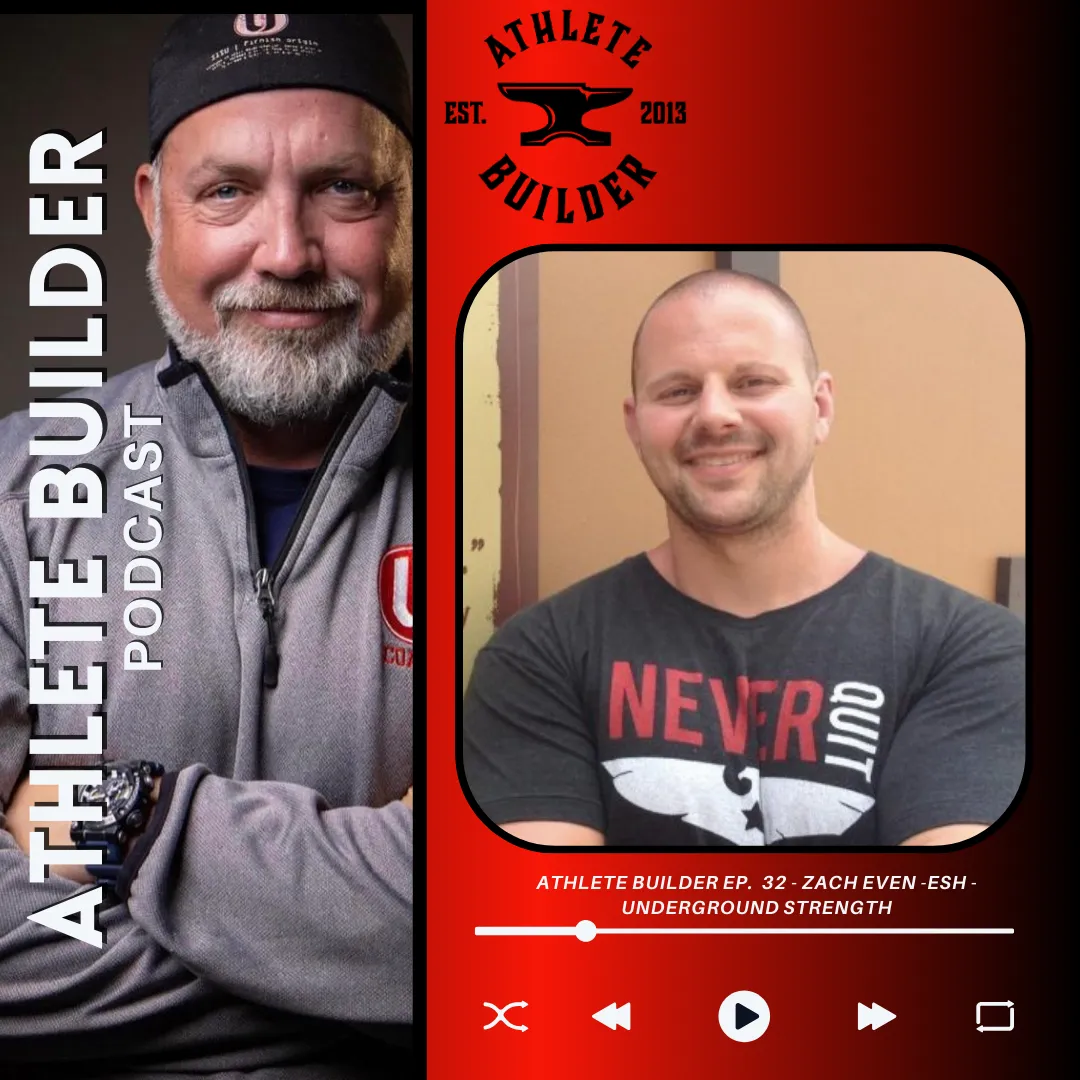
Which is why one thing Zach Even-Esh said on the Athlete Builder podcast should stop every gym owner mid-scroll. Zach founded the Underground Strength Gym in New Jersey more than two decades ago — long enough that, in his words:“Kids I once trained now have their own children... they'll reach out to me 10, 15 years later”— telling him the hard training they did as teenagers became the foundation they stood on in college, in internships, in careers. “Kids were staying for years and years.”
Two generations of the same families. Retention measured in decades, not billing cycles. No franchise machine, no marketing empire — a warehouse gym with a standard.
I owned and ran a private strength facility for 13 years, and I can tell you what that kind of loyalty is worth: everything. So it's worth asking what actually produced it — because it wasn't the equipment.
Families don't stay for workouts. They stay for who their kid is becoming.
Listen to what Zach's former athletes thank him for, years later. Not the programming. Not the PRs. The hard workouts that built “the foundation to really try to excel” — in academics, in internships, in standing out. The parents watched their kid become more confident, more resilient, harder to rattle. That's what they were paying for, whether anyone named it or not.
This is the retention truth most facilities never operationalize: a membership renews on results the parent can see. A workout is a commodity — there's a cheaper one down the street and a free one on YouTube. A kid visibly becoming someone? No parent cancels that.
Zach's version of the same idea, said about kids and pushups, applies word-for-word to the business: “It's got to start at home. The school isn't going to save you.” The families in your building already believe that — it's why they're paying a private facility at all. The question is whether your program is built to prove them right, visibly, on a schedule.
The market gap is getting wider — in your favor
Here's the part that should sharpen every owner's pitch. Zach lines up incoming high school football players every summer — 40-plus kids — and starts counting pushups. His estimate:half or more can't do a single one.Kids entering a collision sport who can't push themselves off the ground.
And he's watching the consequences arrive earlier every year: athletes breaking down in the first two weeks of preseason, before the first game is played. He got curious enough to build a simple spreadsheet — every injured athlete, one column: did they train in the off-season, pre-season, in-season? Yes, no, or barely. The injured column filled up with no and barely. “It doesn't take a rocket scientist,” he said.
Every year of travel-ball scheduling makes this gap wider: more games, more exposure, less development underneath it. Which means the facility that develops the complete athlete — the strength AND the durability AND the habits that hold it together — isn't selling a luxury. It's selling the missing piece of an entire generation's athletic development. That's not a marketing claim. That's a strength coach's spreadsheet.
Standards are a business asset
There's one more thing hiding in Zach's story, and it cuts against most gym-business instincts. His gym isn't easy. The work is hard on purpose — grunt work, carries, crawls, the stuff that builds athletes who don't fall apart. Conventional wisdom says hard standards drive customers away.
Twenty years of multi-generational retention says the opposite. The standard IS the brand. Athletes brag about surviving it. Parents trust it. Alumni send their own kids back to it. Softening the product to keep people never keeps them — it just makes you interchangeable with the cheaper option.
The catch — and this is where most facilities leave money on the table — is that standards only compound when the development is visible. Zach's athletes felt the transformation, but the proof arrived as thank-you messages fifteen years later. Imagine the retention math if every parent saw the evidence every quarter instead: what their athlete's working on, where they've moved, what's next. Same training. Same standard. The proof just stops taking a decade to arrive.
The owner's takeaway
Three questions worth sitting with this week, whatever you run:
1.If your best families stayed a decade, what would that be worth — and what are they actually staying for right now?
2.Can a parent in your building see their athlete's development on paper — or are they taking it on faith?
3.What's your version of Zach's spreadsheet — the simple measurement that would tell you the truth about your program?
If you own or run a facility and want to talk through where your program stands, that's a conversation I have with owners every week — 15 minutes, no pitch, book it here:link.closersoftware.com/widget/bookings/ab-gameplansession.
And the full Even-Esh conversation is below — his origin story alone (two and a half pushups, a habit, a business that's outlasted every fitness trend) is worth the hour.
[EMBED: Full Zach Even-Esh episode — https://youtu.be/64sat73yYk8]
Win the Day. Stay Relentless.
— Jim Beebe · Founder, Athlete Builder · 13 years owning a private strength & performance facility · Author ofAthlete Builder: The Blueprint to Build Champion Athletes

317-224-6960